Boardroom to Pitch Side: Leadership Lessons
with Peter Moore
Boardroom to Pitch Side: Leadership Lessons
with Peter Moore
Peter Moore has spent more than three decades at the top of global gaming, technology and sport, building a career that has spanned some of the industry’s most influential and well known companies.
Liverpool born and bred, he spent over 35 years in the US before stepping away from his role as COO of Electronic Arts in 2017 to return home and take on the role of CEO at Liverpool Football Club. There, he oversaw all business, commercial and operational activity during a period of historic success, with the club delivering both a Champions League triumph and the club’s first Premier League title in 30 years.
Since leaving Liverpool FC in 2020 he has split his time across a portfolio of roles; founding investor in football club in Santa Barbara Sky FC, investing as minority shareholder and board advisor to Polish football club Wisła Kraków SA, advising Wrexham AFC, and serving as a board member, advisor and investor across the worlds of sport, gaming and entertainment.
Peter Moore has spent more than three decades at the top of global gaming, technology and sport, building a career that has spanned some of the industry’s most influential and well known companies.
Liverpool born and bred, he spent over 35 years in the US before stepping away from his role as COO of Electronic Arts in 2017 to return home and take on the role of CEO at Liverpool Football Club. There, he oversaw all business, commercial and operational activity during a period of historic success, with the club delivering both a Champions League triumph and the club’s first Premier League title in 30 years.
Since leaving Liverpool FC in 2020 he has split his time across a portfolio of roles; founding investor in football club in Santa Barbara Sky FC, investing as minority shareholder and board advisor to Polish football club Wisła Kraków SA, advising Wrexham AFC, and serving as a board member, advisor and investor across the worlds of sport, gaming and entertainment.

In elite sport, leadership unfolds under constant scrutiny, where results are immediate and momentum always at risk of shifting. Few roles capture this intensity more than leading one of the world’s most iconic football clubs through a period of transformation.
We sat down with Peter Moore to reflect on the choices, values and philosophies that shaped his tenure. Peter offers a candid perspective on leading under the spotlight, building culture in high-pressure environments, and the principles that endure through uncertainty and change.
In elite sport, leadership unfolds under constant scrutiny, where results are immediate and momentum always at risk of shifting. Few roles capture this intensity more than leading one of the world’s most iconic football clubs through a period of transformation.
We sat down with Peter Moore to reflect on the choices, values and philosophies that shaped his tenure. Peter offers a candid perspective on leading under the spotlight, building culture in high-pressure environments, and the principles that endure through uncertainty and change
A Sliding Door Moment: Leading with Heart
A Sliding Door Moment:
Leading with Heart
Peter’s decision to return to the UK in 2017 and lead Liverpool Football Club was itself an exercise in navigating uncertainty. After 35 years in the United States and a position as Chief Operating Officer at Electronic Arts, the rational choice would have been to stay put. Instead, Peter chose instinct over analysis:
“Some decisions you make with your head and the smart decision there would have been to thank you and say no thank you [...] if I had done that [pros and cons list] when you called me, I'd still be at EA. I wouldn't have gone to Liverpool because I think the cons probably outweighed the pros. But that's when your heart takes over.”
As a Liverpool native who first attended Anfield in 1959, the opportunity to bring decades of experience home and “hopefully, add some value to the football club that had given me so much pleasure over that half a century [...] and maybe leave some kind of a legacy, that opportunity was too good to turn down.” The decision reflected a defining theme of Peter’s approach to leadership: purpose, at times, outweighs the purely rational choice.
Peter’s decision to return to the UK in 2017 and lead Liverpool Football Club was itself an exercise in navigating uncertainty. After 35 years in the United States and a position as Chief Operating Officer at Electronic Arts, the rational choice would have been to stay put. Instead, Peter chose instinct over analysis:
“Some decisions you make with your head and the smart decision there would have been to thank you and say no thank you [...] if I had done that [pros and cons list] when you called me, I'd still be at EA. I wouldn't have gone to Liverpool because I think the cons probably outweighed the pros. But that's when your heart takes over.”
As a Liverpool native who first attended Anfield in 1959, the opportunity to bring decades of experience home and “hopefully, add some value to the football club that had given me so much pleasure over that half a century [...] and maybe leave some kind of a legacy, that opportunity was too good to turn down.” The decision reflected a defining theme of Peter’s approach to leadership: purpose, at times, outweighs the purely rational choice.
Redefining the CEO Role: The Four C’s
Redefining the CEO Role:
The Four C’s
Arriving at Liverpool, Peter found a club that was evolving not just in footballing terms, but in its approach to leadership, and he inherited a role that was intentionally undefined.
“One of the things that was the first challenge was my job description was like a paragraph, which was basically go run Liverpool Football Club from a business perspective [...] the club at that point was going through this major transition and I needed to figure out myself what my job description would be based on what I was seeing were the needs.”
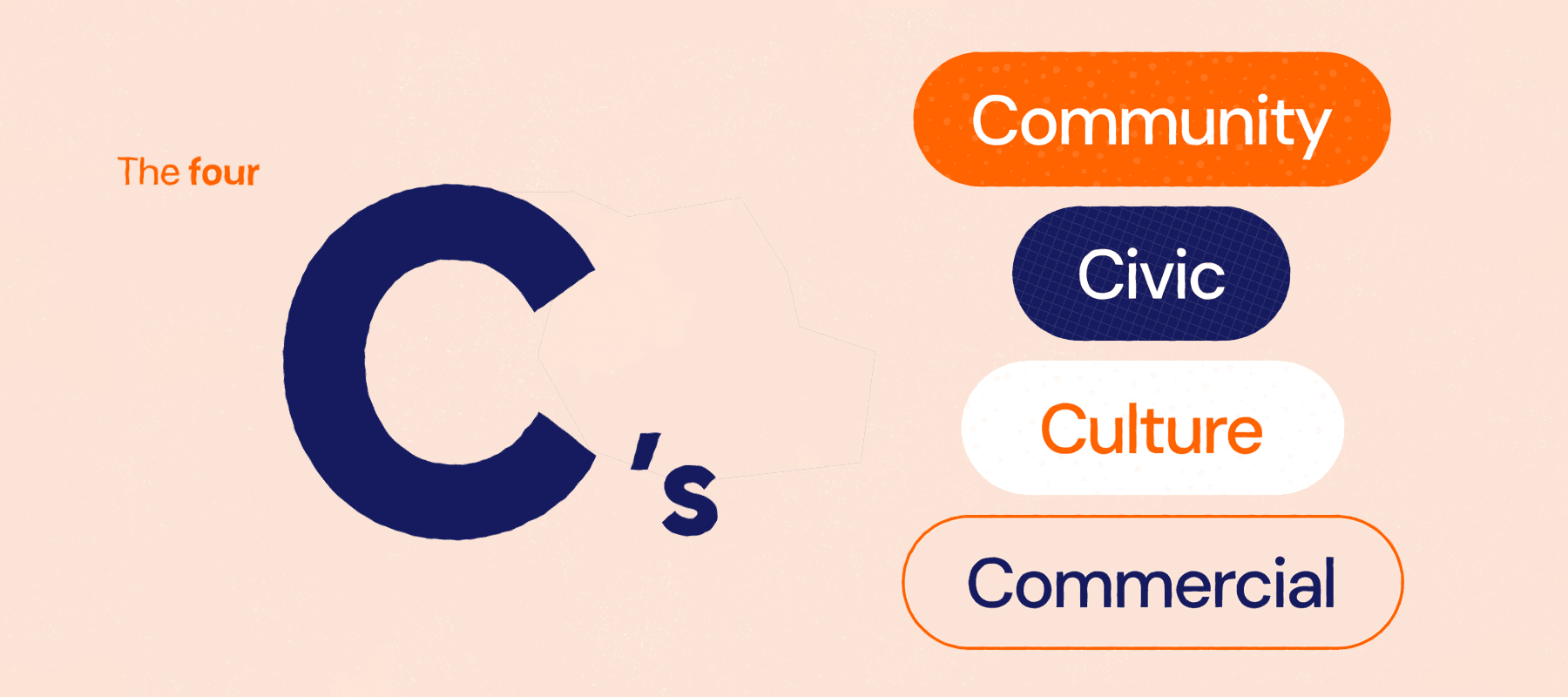
Rather than waiting for clarity, Peter created it, shaping his priorities around what he calls the “Four C’s”:
Community:
“It’s not just the employees, but it’s the fan base. And I think it’s getting this unbelievable ecosystem of over 300 million fans on side with you, that everybody knows where we’re going. Everybody knows what they need to do.”
Civic relationships:
“The power of Liverpool Football Club to bring fame, fortune to the city of Liverpool every weekend.”
Commercial:
“We figured out the virtuous cycle of football: win games, get more money, get more money, buy better players, buy better players, win more games, win more games, get even more money.”
Culture:
“I had 800 employees who needed direction, needed a North Star, needed somebody to come in and really give them focus [...] we had to mobilise the 800 people who don’t kick a ball for Liverpool Football Club to support everything that was going on during that period.”
Crucially, that period coincided with the onset of the COVID-19 pandemic.
Arriving at Liverpool, Peter found a club that was evolving not just in footballing terms, but in its approach to leadership, and he inherited a role that was intentionally undefined.
“One of the things that was the first challenge was my job description was like a paragraph, which was basically go run Liverpool Football Club from a business perspective [...] the club at that point was going through this major transition and I needed to figure out myself what my job description would be based on what I was seeing were the needs.”
Rather than waiting for clarity, Peter created it, shaping his priorities around what he calls the “Four C’s”:
Community:
"It’s not just the employees, but it’s the fan base. And I think it’s getting this unbelievable ecosystem of over 300 million fans on side with you, that everybody knows where we’re going. Everybody knows what they need to do.”
Civic relationships:
“The power of Liverpool Football Club to bring fame, fortune to the city of Liverpool every weekend.”
Commercial:
"We figured out the virtuous cycle of football: win games, get more money, get more money, buy better players, buy better players, win more games, win more games, get even more money.”
Culture:
“I had 800 employees who needed direction, needed a North Star, needed somebody to come in and really give them focus [...] we had to mobilise the 800 people who don’t kick a ball for Liverpool Football Club to support everything that was going on during that period.”
Crucially, that period coincided with the onset of the
COVID-19 pandemic.
Building Culture in the Eye of the Storm:
Building Culture
in the Eye of the Storm:
Within two years of being at Liverpool, Peter faced his toughest test yet: leading Liverpool through the uncertainty of COVID-19. The pandemic brought operations to a halt almost overnight, threatening revenue streams and forcing leaders like Peter to make decisions with incomplete information, competing priorities, and under intense public scrutiny.
“This incredibly surreal time of managing football, managing our employee base [...] how do we manage our stadium, how do we work with our employees to make sure that we keep them whole and how do we keep our players safe and healthy [...] should we figure out how we’re going to get this season back up and running again?”
For Peter, leadership in these circumstances demanded speed, pragmatism and humility. He emphasised the importance of acting quickly – because “perfection takes a while” – while remaining open to course correction as events unfold.
This was particularly evident in the club’s initial approach to furlough during the pandemic. The decision drew significant criticism, and within 48 hours the club reversed course, with Peter issuing an apology and committing to covering staff costs in full. The episode underscored a core leadership principle for Peter: decisiveness matters, but credibility comes from transparency and the willingness to adapt.
Within two years of being at Liverpool, Peter faced his toughest test yet: leading Liverpool through the uncertainty of COVID-19. The pandemic brought operations to a halt almost overnight, threatening revenue streams and forcing leaders like Peter to make decisions with incomplete information, competing priorities, and under intense public scrutiny.
“This incredibly surreal time of managing football, managing our employee base [...] how do we manage our stadium, how do we work with our employees to make sure that we keep them whole and how do we keep our players safe and healthy [...] should we figure out how we’re going to get this season back up and running again?”
For Peter, leadership in these circumstances demanded speed, pragmatism and humility. He emphasised the importance of acting quickly – because “perfection takes a while” – while remaining open to course correction as events unfold.
This was particularly evident in the club’s initial approach to furlough during the pandemic. The decision drew significant criticism, and within 48 hours the club reversed course, with Peter issuing an apology and committing to covering staff costs in full. The episode underscored a core leadership principle for Peter: decisiveness matters, but credibility comes from transparency and the willingness to adapt.
Translating Corporate Lessons to Sport
Translating Corporate
Lessons to Sport
Transitioning from the fast-paced world of technology and video games to the unique environment of English football required Peter to both learn and unlearn. In the corporate world, “the product is the product.” In football, “it’s about emotion, it’s about the results last weekend, it’s about people’s attitudes.” The scrutiny is constant, both in the media and on the streets of Liverpool.
Peter drew on his experience at Electronic Arts, where global town halls and direct engagement with teams were standard. At Liverpool, he extended this approach to employees and fans alike, presenting strategy at official supporters’ clubs around the world, writing a manifesto to articulate the club’s purpose, and encouraging open dialogue.
“Wherever I went in the world, I would go that night, find a local pub [...] and invite fans to come have a beer with me. And I would present the club strategy to the fans. So we're all in this together. It's not just the employees, but it's the fan base.”
Transitioning from the fast-paced world of technology and video games to the unique environment of English football required Peter to both learn and unlearn. In the corporate world, “the product is the product.” In football, “it’s about emotion, it’s about the results last weekend, it’s about people’s attitudes.” The scrutiny is constant, both in the media and on the streets of Liverpool.
Peter drew on his experience at Electronic Arts, where global town halls and direct engagement with teams were standard. At Liverpool, he extended this approach to employees and fans alike, presenting strategy at official supporters’ clubs around the world, writing a manifesto to articulate the club’s purpose, and encouraging open dialogue.
“Wherever I went in the world, I would go that night, find a local pub [...] and invite fans to come have a beer with me. And I would present the club strategy to the fans. So we're all in this together. It's not just the employees, but it's the fan base.”

Values as the North Star:
Peter’s approach to building culture at Liverpool reflected a leadership philosophy anchored in principles and values. For him, effective leadership in turbulent times comes not only from acting with agility and decisiveness, but from acting with integrity, honesty and purpose.
“We’re in a rough world right now […] Honesty, integrity, values, morality – because, boy, do we need it right now.”
This values-driven approach translated into constant engagement with all stakeholders:
“It was all about engagement, engagement with the staff, engagement with football, with Jürgen and the staff, engagement with our fan base, engagement with our civic relationships, the people of Liverpool, the people of Merseyside, the people in the UK, the people all over the world.”
To capture this identity and purpose, Peter coined the phrase “local heart, global pulse”: a club deeply rooted in its city’s history and culture yet connected to a global fanbase. The concept became both a cultural anchor and a leadership philosophy: stay grounded in purpose while operating at global scale.
Peter’s approach to building culture at Liverpool reflected a leadership philosophy anchored in principles and values. For him, effective leadership in turbulent times comes not only from acting with agility and decisiveness, but from acting with integrity, honesty and purpose.
“We’re in a rough world right now […] Honesty, integrity, values, morality – because, boy, do we need it right now.”
This values-driven approach translated into constant engagement with all stakeholders:
“It was all about engagement, engagement with the staff, engagement with football, with Jürgen and the staff, engagement with our fan base, engagement with our civic relationships, the people of Liverpool, the people of Merseyside, the people in the UK, the people all over the world.”
To capture this identity and purpose, Peter coined the phrase “local heart, global pulse”: a club deeply rooted in its city’s history and culture yet connected to a global fanbase. The concept became both a cultural anchor and a leadership philosophy: stay grounded in purpose while operating at global scale.

Lessons from the Kop: Peter Moore’s imperatives for Leaders
Lessons from the Kop:
Peter Moore’s imperatives
for Leaders
For Peter, three key lessons stand out for leaders navigating heightened visibility amidst uncertainty:
Lead with Heart:
Sometimes, the right decision defies logic. Purpose and instinct do matter, especially when the stakes are high.
Engage Widely:
Leadership is a collective act – bring everyone along, from employees to fans, from boardroom to community.
Act with Integrity:
In uncertain times, credibility is built on honesty, humility, and a willingness to adapt.
For Peter, three key lessons stand out for leaders navigating heightened visibility amidst uncertainty:
Lead with Heart:
Sometimes, the right decision defies logic. Purpose and instinct do matter, especially when the stakes are high.
Engage Widely:
Leadership is a collective act – bring everyone along, from employees to fans, from boardroom to community.
Act with Integrity:
In uncertain times, credibility is built on honesty, humility, and a willingness to adapt.
For Peter, three key lessons stand out for leaders navigating heightened visibility amidst uncertainty:
Lead with Heart:
Sometimes, the right decision defies logic. Purpose and instinct do matter, especially when the stakes are high.
Engage Widely:
Leadership is a collective act – bring everyone along, from employees to fans, from boardroom to community.
Act with Integrity:
In uncertain times, credibility is built on honesty, humility, and a willingness to adapt.